Skin School / 5 Sunscreen Myths You Should Stop Believing
5 Sunscreen Myths You Should Stop Believing
By Skinimalism Editorial · September 2026
5 min read
Sunscreen is often treated as an optional skincare product, especially when the weather is cloudy or your skin naturally has a deeper complexion.
But sun protection isn't only about preventing sunburn. It also helps protect against premature skin aging and UV-related skin damage.
For South Asian skin, sunscreen is particularly relevant when managing concerns such as post-acne marks and uneven pigmentation.
Unfortunately, several common myths still prevent people from using it correctly.
Let's clear up five of them.
Myth 1: Brown Skin Doesn't Need Sunscreen
The truth: Every skin tone needs sun protection.
Melanin provides some natural protection against UV radiation, but it doesn't make your skin immune to sun damage.
People with medium to deeper skin tones can still experience premature aging, sun-related pigmentation, and skin cancer.
Sun exposure can also make existing dark spots more noticeable.
Instead of assuming your complexion provides enough protection, include broad-spectrum sunscreen in your daily routine.
Myth 2: Sunscreen Is Only Necessary in Summer
The truth: UV exposure isn't limited to hot weather.
Temperature and UV radiation are different things. Even when the weather feels cool or cloudy, ultraviolet rays can still reach your skin.
In Pakistan, where outdoor conditions can vary significantly throughout the year, sun protection should not depend entirely on the temperature.
A consistent sunscreen habit is more practical than using SPF only during summer.
Myth 3: You Don't Need Sunscreen Indoors
The truth: Your exposure depends on your surroundings.
If you spend most of your day away from sunlight, your exposure may be limited.
However, UVA radiation can pass through ordinary window glass. If you sit near a sunny window, drive frequently, or move between indoor and outdoor spaces, sun protection remains important.
You don't need to fear every minute indoors. Simply consider how much daylight reaches your skin throughout the day.
Myth 4: SPF 50 Means You Never Need to Reapply
The truth: Higher SPF doesn't provide unlimited protection.
SPF measures protection against UVB-related sunburn under specific testing conditions. It doesn't tell you how long sunscreen will remain effective throughout your entire day.
Sweating, swimming, rubbing your face, and towel-drying can reduce the sunscreen remaining on your skin.
When outdoors, reapply approximately every two hours and after swimming or heavy sweating.
Remember to apply enough sunscreen in the first place. A very thin layer may not provide the protection stated on the label.
Myth 5: Tinted Sunscreen Is Just Makeup
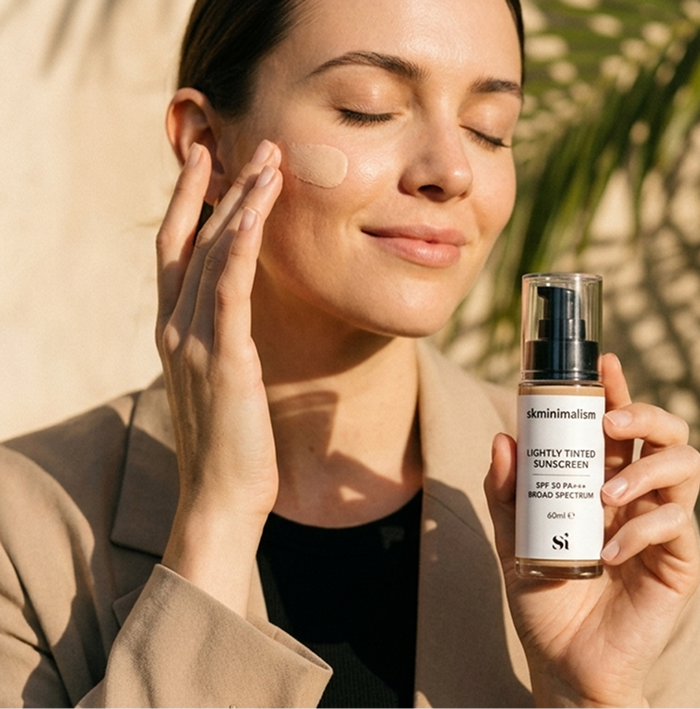
The truth: A tinted sunscreen can provide genuine sun protection.
Tinted sunscreens combine UV protection with pigments that create a more even-looking finish.
Some tinted formulas contain iron oxides, which may also help protect against visible light associated with pigmentation in darker skin tones.
However, not every tinted product offers the same protection. Check the label for broad-spectrum SPF and review the ingredients.
Tint should never replace applying an adequate amount of sunscreen.
How Do You Choose the Right Sunscreen?
Look for a product that offers broad-spectrum protection and SPF 30 or higher.
Consider your skin type, comfort, finish, and whether the formula blends well with your natural complexion.
If you have oily or blemish-prone skin, a suitable non-comedogenic formula may be helpful.
Most importantly, choose something you can apply consistently.
The Skinimalism Approach
At Skinimalism, we believe sun protection should be a practical part of everyday skincare, not another complicated step.
Our Filter in a Bottle Tinted SPF 50 is designed for customers who prefer sunscreen with a tinted, natural-looking finish.
For a simpler approach to daytime skincare, explore our Sun & Shield Duo.
Your next step: Make daily sun protection part of your routine.
Free guide
Get the 3-Step Guide
for South Asian skin.
Which ingredients work in humid climates. Which combos to avoid. Delivered to your WhatsApp or email — no spam, ever.